
Types of Canine Cancer
|
Unlike many other animals, dogs are susceptible to the same types of cancers for which humans are at risk. Dogs, for example, are the only non-human species in which spontaneous prostate cancer occurs.
Listed below are the most common types of cancer in dogs. Click on any disease type below for more information about the definition, risk factors, causes, symptoms, diagnosis, treatment, and prognosis of that particular form of cancer. Bladder Cancer, Brain Tumors, Hemangiosarcoma, Lymphoma, Lung Cancer, Mammary Carcinoma, Mast Cell Tumors, Osteosarcoma (Bone Cancer), Skin Cancer |

|
Types of Cancer in Dogs
Unlike many other animals, dogs are susceptible to the same types of cancers for which humans are at risk. Dogs, for example, are the only non-human species in which spontaneous prostate cancer occurs. Listed below are the most common types of cancer in dogs.
Click on any disease type below for more information about the definition, risk factors, causes, symptoms, diagnosis, treatment, and prognosis of that particular form of cancer.
Canine Bladder Cancer
|
Bladder Cancer in dogs occurs with some breeds at higher risk than others (West highland Terriers for example). This is a slow developing cancer and pets may not show symptoms for 3 to 6 months. Once symptoms occur, urinary obstruction and bleeding are common.
|

|

|
Canine Brain Tumors
Canine Brain Tumors in the brain may occur in dogs as primary or as metastatic tumors. Epileptic-like seizures or other extreme behavioral changes may be the only clinical signs. CAT scanning will allow the precise localization of these lesions. Surgical excision followed by radiation therapy is the indicated treatment if the tumor is in an accessible portion of the skull. Radiation therapy alone can control some inoperable tumors.
|
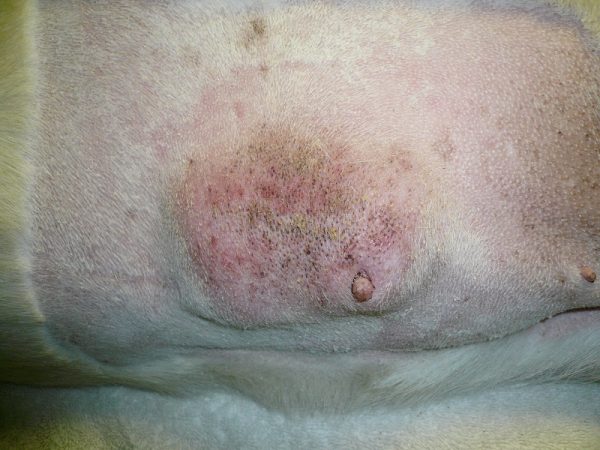
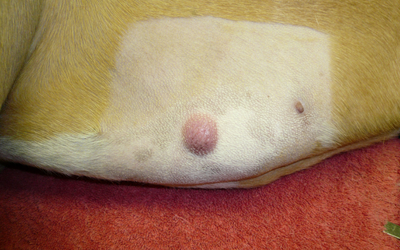
Canine Mammary Carcinoma
Female dogs are at high risk for developing malignant mammary tumors (dog breast cancer). Mammary tumors are the most common type of tumors in non-spayed female dogs. While 50 percent of these tumors are malignant, complete surgical removal is sometimes curative if cancer has not metastasized.
|
|
|
Mast Cell Tumors
A common malignant tumor in dogs is the mast cell tumor. Mast cells are immune cells that are responsible for allergies. Mast cells can be found in all tissues of the body but typically form tumors on the skin in close to 20 percent of the canine population. MCTs range from relatively benign to extremely aggressive, leading to tumor spread and eventual death. Particular breeds of dogs are at risk for the development of this tumor, indicating a role for genetic factors.
|
Malignant Histiocytosis
Malignant histiocytosis (MH), while rare in people, occurs frequently in certain breeds of dogs including Rottweilers, Golden Retrievers, Flat-Coated Retrievers, and Bernese Mountain Dogs. There is no reported effective therapy for this disease. Recent work suggests Lomustine (CCNU) is helpful in extending dog survival. It occurs with high incidence in Bernese Mountain Dogs, Rottweilers, Flat-Coated Retrievers, Golden Retrievers, and sporadically in many other breeds. Histiocytic sarcomas occur as localized lesions in the spleen, lymph nodes, lung, bone marrow, skin and subcutis, brain, and periarticular tissue of large appendicular(limb) joints. Histiocytic sarcomas can also occur as multiple lesions in single organs (especially the spleen), and rapidly disseminate to involve multiple organs. Hence, disseminated histiocytic sarcoma is difficult to distinguish from MH, which is a multi-system, rapidly progressive disease in which there is simultaneous involvement of multiple organs such as the spleen, lymph nodes, lung, bone marrow, skin, and subcutis. Response of histiocytic sarcomas and MH to chemotherapy is at the best brief.
|

|
Squamous Cell Carcinomas
Squamous cell carcinoma is one of the most common cancers found in dogs. Common sites are the mouth and the toes (nailbeds). Early detection and complete surgical removal are the treatment of choice and fewer than 20% develop metastatic disease. SCC of the tonsil and tongue are quite aggressive and fewer than 10% survive 1 year or longer despite treatment measures.
Head & Neck
Cancer of the mouth is common in dogs. Signs to watch for are a mass on the gums, bleeding, odor, or difficulty eating. Since many swellings are malignant, early, aggressive treatment is essential. Cancer may also develop inside the nose of dogs. Bleeding from the nose, breathing difficulty, or facial swelling are symptoms that may indicate cancer and should be checked by your veterinarian.
Hemangiosarcoma
|
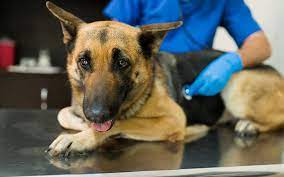
An incurable tumor of cells that line blood vessels (endothelial cells). Although dogs of any age and breed are susceptible to hemangiosarcoma, it occurs more commonly in dogs beyond middle age, and in breeds such as Golden Retrievers, German Shepherd Dogs, Portuguese Water Dogs, and Skye Terriers, among others. Hemangiosarcoma develops slowly and is essentially painless so clinical signs are usually not evident until the advanced stages when the tumors are resistant to most treatments. Less than 50% of dogs treated with standard-of-care of care for this tumor (surgery and intensive chemotherapy) survive more than six months. Many dogs die from severe internal bleeding before there is an opportunity to institute treatment. To learn more about Hemangiosarcoma here.
|
Lymphoma
|
One of the most common cancers seen in dogs and probably occurring 2 to 5 times as frequently in dogs than in people. Although there are breeds that appear to be at increased risk for this disease, lymphoma can affect any dog of any breed at any age. Most of the time, lymphoma appears as swollen glands (lymph nodes) that can be seen or felt under the neck, in front of the shoulders, or behind the knee. Occasionally, lymphoma can affect lymph nodes that are not visible or palpable from outside the body, such as those inside the chest or in the abdomen. In these cases, dogs may accumulate fluid in the chest that makes breathing difficult, or they may have digestive problems (diarrhea, vomiting, or painful abdomen). Lymphoma is generally considered treatable. Multi-agent chemotherapy consisting of L-asparaginase, vincristine, cyclophosphamide, doxorubicin, and prednisone, is the standard of care for this disease. However, there are various subtypes of lymphoma that exhibit different behaviors, and some of the more aggressive types are unresponsive to any available treatment.
|

|
Melanoma
Occurs commonly in dogs with pigmented (dark) skin. Melanomas arise from pigment-producing cells called melanocytes, which are responsible for coloring the skin. Any dog can be affected, but Gordon Setters, Standard and Miniature Schnauzers, Doberman Pinschers, and Scottish terriers, among others, are at increased risk to develop melanoma, suggesting that this disease may have a hereditary component. Melanomas can occur in areas of haired skin, where they usually form small, dark (brown to black) lumps, but can also appear as large, flat, wrinkled masses. Melanoma of the haired skin in dogs is usually a benign tumor, although it can cause severe discomfort. In contrast, malignant melanoma, which develops in the mouth or in the distal limbs (usually the toenail beds), is an incurable disease. These tumors have very often spread to distant parts of the body (metastasized) by the time they are first noticed, making complete surgical removal impossible. Radiation therapy can help extend the lives of affected dogs, but also is ineffective against tumor cells that have metastasized. Chemotherapy is also not considered capable of adequately controlling canine malignant melanoma. Melanoma seems to be uniquely responsive to immune-based therapies, and various novel approaches are under development to treat this disease.
Osteosarcoma
The most common type of primary bone cancer in dogs, accounting for up to 85% of tumors that originate in the skeletal system. Although it is mostly a disease of older large or giant breed dogs, it can affect dogs of any size or age. Osteosarcoma may be found in many areas, but it most commonly affects the bones bordering the shoulder, wrist, and knee. The first sign an owner usually sees with this disease is lameness in the affected leg. They may also notice a swelling over the area or their dog may seem painful at the site. The tumors are very aggressive and metastatic, so it is a fair assumption that at the time of diagnosis the disease will have already spread beyond the primary site. For this reason, the standard-of-care for bone cancer includes surgery to remove the primary tumor, followed by chemotherapy to attack the cells that have left the site. In dogs, approximately 50% survive one year with standard-of-care, less than 30% survive 2 years, and less than 10% reach 3 years.
Testicular
Testicular tumors are common in dogs, especially those with retained testes. Most of these cancers are preventable with castration (neutering) and curable with surgery if done early in the disease process.
